
Why segmentation improves email campaigns
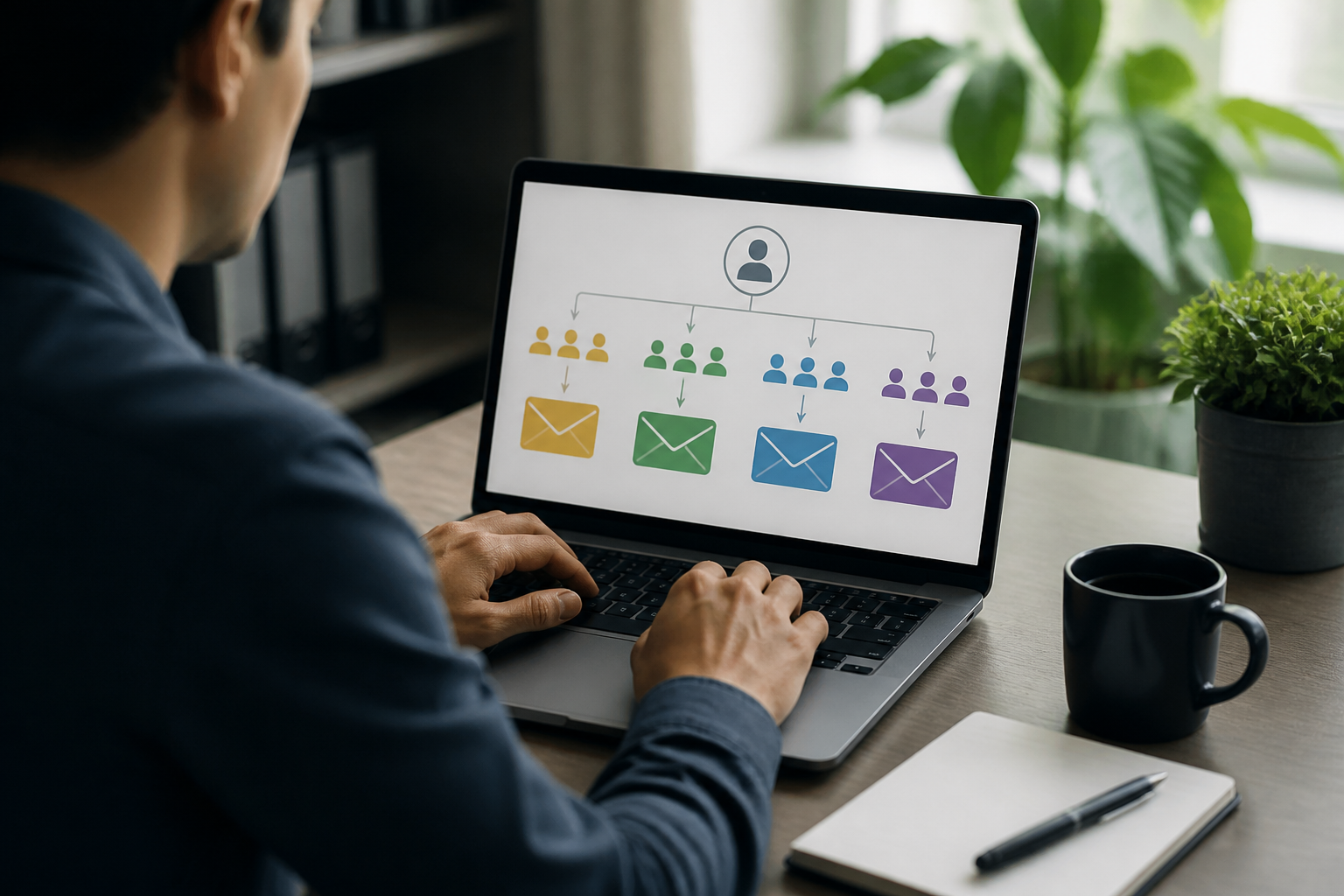
Email list segmentation means dividing subscribers into meaningful groups and sending each group messages that match its circumstances, interests, behavior, or relationship with your business. Instead of treating every contact as equally ready, interested, or informed, segmentation helps you adjust the subject line, offer, timing, examples, and call to action.
The main benefit is relevance. A new subscriber may need education, while a long-term customer may respond better to advanced advice or a loyalty invitation. Someone who repeatedly browses one product category should not receive the same campaign as someone interested in another category. More relevant communication can improve engagement and reduce the frustration caused by repetitive, poorly timed, or unsuitable messages.
Effective segmentation is not simply collecting as many data points as possible. It is choosing useful distinctions, applying them consistently, and reviewing whether they improve the subscriber experience. Start with a few groups that support clear campaign decisions. Expand only when additional detail changes what you send.
Define the decisions your segments will support
Before creating fields, tags, or automation rules, identify the decisions you want segmentation to make easier. You might want to decide which onboarding message a person receives, whether a customer should see a purchase reminder, or which educational topic deserves emphasis.
A useful segment has three characteristics. First, its members share a meaningful trait. Second, that trait changes the message or journey. Third, you can identify it reliably with information you already collect or can collect ethically.

For example, “people interested in professional development” may be useful if you sell several learning paths and can recommend different content. “People with blue profile pictures” is unlikely to support a meaningful campaign decision. A segment should connect information to action.
Write a simple statement for every planned group: “Because these subscribers have this characteristic, we will send them this different message.” If the second half remains unchanged, the segment may add complexity without value.
Core segmentation approaches
Demographic and geographic data
Demographic information can include age range, job role, company size, or language preference, provided subscribers voluntarily supply it and your use is appropriate. Geographic segmentation may reflect country, region, time zone, or proximity to a store or event.
These attributes are valuable when they affect relevance. A regional retailer can promote local inventory or opening hours. A business serving different industries can use job roles to change examples and terminology. A global sender can schedule messages in local time and respect language expectations.
Avoid making assumptions from demographic data. A location does not prove a person’s preferences, and a job title may not describe current responsibilities. Use these fields as signals, not complete identities. Give subscribers a way to update their information, and avoid requesting sensitive data unless it is genuinely necessary.

Signup source and acquisition context
The place and promise that brought someone to your list often reveal initial intent. Contacts who joined through a webinar may need follow-up related to that webinar. People who downloaded a checklist may appreciate an expanded guide before receiving a sales invitation. Subscribers acquired through a partner should receive messaging consistent with the expectation that partner created.
Track source with consistent values rather than free-form labels. For instance, use a controlled set such as “webinar,” “organic article,” “checkout,” and “referral.” Then compare how each source engages over time. A source producing many signups but little useful engagement may require a clearer promise, better targeting, or a revised welcome sequence.
Signup context should inform early communication, but it should not permanently define subscribers. Interests can change, so allow later behavior and preferences to update the relationship.
Engagement level
Engagement segmentation separates recent, occasional, inactive, and highly active subscribers. Common signals include opens, clicks, site visits, content downloads, replies, and purchases. Since individual tracking signals can be incomplete, interpret them together and focus especially on meaningful actions such as clicking, replying, registering, or buying.
An active segment might receive deeper content, early access, or an invitation to share feedback. A less engaged group may need shorter messages, a clearer benefit, or a preference reminder. Inactive contacts can enter a reengagement sequence rather than receiving every ordinary campaign.
Do not treat inactivity as a character judgment. It may reflect changed priorities, inbox overload, tracking limitations, or an offer that no longer fits. Set a reasonable review period for your audience, then test a respectful reengagement message. If there is no meaningful response, reducing frequency or suppressing the address can protect deliverability and improve list quality.
Purchase history and customer stage
Purchase data supports highly practical personalization. You can distinguish prospects, first-time customers, repeat customers, subscribers to a service, and former customers. Product category, purchase date, order frequency, and renewal status may also guide useful campaigns.
A first-time buyer might receive setup guidance and care instructions. A repeat customer may be ready for complementary products or a loyalty benefit. Someone approaching renewal may need a reminder that explains timing, value, and available choices. A former customer may require a different message from a new prospect because the relationship already includes experience.
Use purchase information carefully. Do not recommend something the person already owns unless replacement or replenishment is relevant. Consider shared household accounts, gifts, returns, and purchases made for another person. A brief preference center or post-purchase question can prevent inaccurate assumptions.
Build a practical segmentation system
Choose a dependable data model
Your email platform may use fields, tags, lists, events, or audience rules. The terminology differs, but the principle is consistent: define what each data point means, who can change it, and when it expires.
Separate relatively stable attributes from temporary behavior. Language preference may remain useful for a long period, while “clicked the spring promotion” should have a limited lifetime. Document naming conventions, allowed values, and the event that adds or removes a person from a segment.
Avoid creating separate lists for every minor variation. Multiple lists can produce duplicate contacts, inconsistent consent records, and difficult reporting. A central subscriber record with clear attributes and behavioral rules is usually easier to manage. The right structure depends on your platform, but governance matters more than labels.
Ask for information progressively
The signup form should request only information needed to deliver the promised experience. Long forms reduce completion and can create data that subscribers enter inaccurately. Begin with an email address and, where appropriate, one question that directly affects content.
You can learn more later through preference centers, welcome surveys, quizzes, account activity, or voluntary profile updates. Explain the benefit of answering: a subscriber might choose topics, frequency, language, or product interests to receive a better experience.
Progressive profiling should remain transparent. Do not hide required marketing conditions behind confusing questions. Make consent, unsubscribe options, and preference controls easy to understand. Respecting choices improves trust and makes the information you collect more dependable.
Connect segments to campaign plans
A segment becomes valuable when it has a defined use. Build a small planning table with four columns: audience, goal, message difference, and success measure.
For example, new subscribers might receive orientation, with click-through to a starter guide as the primary measure. Repeat customers might receive replenishment advice, with completed purchases as the measure. Inactive subscribers might receive a preference or reengagement message, with confirmed interest or continued inactivity as the outcome.
Limit overlapping campaigns. If a person qualifies for several groups, establish priority rules. A customer-service issue should generally take precedence over a promotional recommendation. A recent purchase may temporarily override a pre-purchase campaign. Clear precedence prevents contradictory messages.
Personalize beyond inserting a name
A first name in a subject line is not meaningful personalization if the content remains generic. Relevance comes from changing the substance of the message. Use the subscriber’s concern, stage, previous action, selected topic, or likely next question to shape the campaign.
Suppose a software company has subscribers who want reporting, collaboration, or automation. The overall product may be the same, but the examples, benefits, tutorial, and call to action can differ. A reporting-focused reader could receive a dashboard guide, while an automation-focused reader receives a workflow example.

Personalization also includes omission. Do not send a beginner explanation to an advanced customer merely because that person remains on a broad newsletter. Do not repeatedly promote an item after purchase. Sometimes the most relevant action is suppressing a message, delaying it, or replacing it with useful support.
Keep dynamic content understandable and testable. If a data field is empty, provide a sensible fallback. Check how the email renders when a subscriber qualifies for no special section, one section, or several sections. Poorly handled personalization can appear careless and damage confidence.
Use behavior without becoming intrusive
Behavioral data can reveal immediate intent, but it requires restraint. A visit to a page may indicate curiosity, comparison, accidental navigation, or research for someone else. Avoid presenting an inference as certainty.
Use behavioral triggers for helpful follow-up: a tutorial after a resource download, a reminder about an unfinished registration, or guidance after a confirmed purchase. Give the message a clear reason and a useful next step. Avoid excessive frequency, especially when several actions trigger overlapping automations.
Explain data practices in your privacy notice and follow applicable requirements for consent, access, retention, and unsubscribe handling. For regulated or sensitive categories, seek qualified legal guidance rather than relying on a marketing template.
Test, measure, and refine
Segmentation should be evaluated by outcomes, not by the number of groups created. Select a primary measure that matches the campaign goal. A sales message may use completed purchases or qualified visits. An educational email may use meaningful clicks, registrations, or replies. Deliverability, unsubscribes, complaints, and inactivity provide important context.
Compare a segmented campaign with a sensible control when possible. The control might receive a broad version, while a selected group receives tailored content. Keep the comparison fair by considering send time, offer, audience quality, and seasonality. A single result does not prove that segmentation caused the difference, so repeat promising tests.
Test one meaningful variable at a time when you need a clear lesson. You might compare a product-specific message with a general message, or test whether a preference-based send performs better than a behavior-based send. Record the hypothesis, audience definition, duration, and decision rule before sending.
If a segment performs poorly, do not immediately conclude that the idea is useless. Check data quality, segment size, message clarity, offer fit, timing, and overlap with other campaigns. A narrowly defined audience may be accurate but too small for a reliable conclusion. An apparently strong result may reflect an unusually favorable season.
Common mistakes to avoid
One frequent mistake is over-segmentation. Splitting a list into many tiny groups creates production work and can make each campaign too infrequent or inconsistent. Combine groups when their needs and message decisions are essentially the same.

Another mistake is using outdated data. A preference collected years ago may no longer reflect current interest. Add expiration rules for temporary tags, invite updates, and allow recent behavior to influence campaign decisions.
Some teams segment only by purchase value. Revenue can help prioritize service or offers, but it does not explain motivation. A high-value customer may be interested in a different category, while a lower-value customer may have strong future potential. Combine value with context rather than treating it as a complete profile.
Do not use engagement metrics blindly. Apple Mail privacy features, image blocking, shared inboxes, and device changes can make opens imperfect. Clicks, replies, registrations, purchases, and preference updates often provide stronger evidence of intent.
Finally, do not let segmentation replace good content. A precisely targeted email still fails when its promise is unclear, its offer is weak, its design is difficult to use, or its call to action lacks a reason to act.
A straightforward implementation plan
Begin by reviewing your current audience and campaign history. Identify repeated differences in needs, lifecycle stage, or behavior. Choose two or three segments where a different message is already obvious.
Next, audit the data behind those segments. Confirm that fields use consistent values, consent is recorded appropriately, and automation rules have clear entry and exit conditions. Remove obsolete tags and resolve duplicate records where your system permits.
Create one campaign for each priority group. Write a distinct objective, message angle, call to action, and success measure. Prepare a fallback version for missing data, and suppress contacts who should not receive the message because of a recent purchase, support issue, or conflicting automation.
Before sending, preview every dynamic block, link, and subject line. Test on relevant devices and confirm that unsubscribe and preference links work. Send a controlled test or pilot when the audience and platform allow it.
After the campaign, review both positive and negative signals. Compare results with a baseline, record what changed, and decide whether to expand, revise, pause, or retire the segment. Treat each send as a learning opportunity, not a permanent verdict.
Frequently asked questions
How many segments should a small business create?
There is no universal number. Begin with the smallest set that changes your campaign decisions, often lifecycle, interest, and engagement groups. Add a segment only when you can explain its distinct message and measure its result. Fewer, well-maintained groups usually outperform a complicated structure nobody updates.
Should segments be based on demographics or behavior?
Use whichever information most reliably changes relevance. Demographics may help with language, location, or industry-specific examples. Behavior may better indicate current intent. Combining them can be useful, but behavior should not be interpreted without context. Avoid sensitive attributes unless collection and use are justified, transparent, and compliant.
How often should segments be updated?
Update timing depends on the data. Transactional events should normally update promptly. Temporary engagement or browsing tags may need expiration after a defined period. Stable preferences can remain until the subscriber changes them. Review your rules regularly and investigate unusual growth, overlap, or sudden performance changes.
What should inactive subscribers receive?
A respectful reengagement message can remind them of the value they subscribed for, offer frequency or topic choices, and provide a clear way to remain subscribed. If they do not respond, consider reducing sends or suppressing them. Continuing indefinitely can waste resources and may harm overall deliverability.
Can segmentation work without advanced software?
Yes. A spreadsheet, customer database, or basic email platform can support a useful beginning if fields are consistent and consent is managed properly. Start with manual groups and simple rules. As volume grows, automation reduces errors, but software cannot compensate for unclear strategy or poor data.
Is personalized content always better?
Not automatically. Personalization helps when the information is accurate and the message becomes more useful. It can hurt when it feels intrusive, exposes assumptions, or produces awkward errors. Use the least data necessary, explain choices, and prioritize clear value over decorative customization.
Conclusion
Email segmentation works when it connects a real subscriber difference to a meaningful change in communication. Start with decisions, not data collection. Group people by lifecycle, interests, source, engagement, or purchase context only when those distinctions help you deliver better timing, examples, offers, or support.
Build dependable fields, ask for information progressively, and establish rules for overlap and expiration. Personalize the substance of campaigns rather than merely inserting names. Use behavioral signals cautiously, respect privacy and consent, and measure business outcomes alongside engagement and deliverability.
The strongest system is not the most complicated one. It is the system your team can maintain, explain, test, and improve. Begin with a few high-value segments, send genuinely different campaigns, study the results, and adjust based on evidence. Relevance grows when every message gives subscribers a clear reason to read, click, reply, or remain connected.